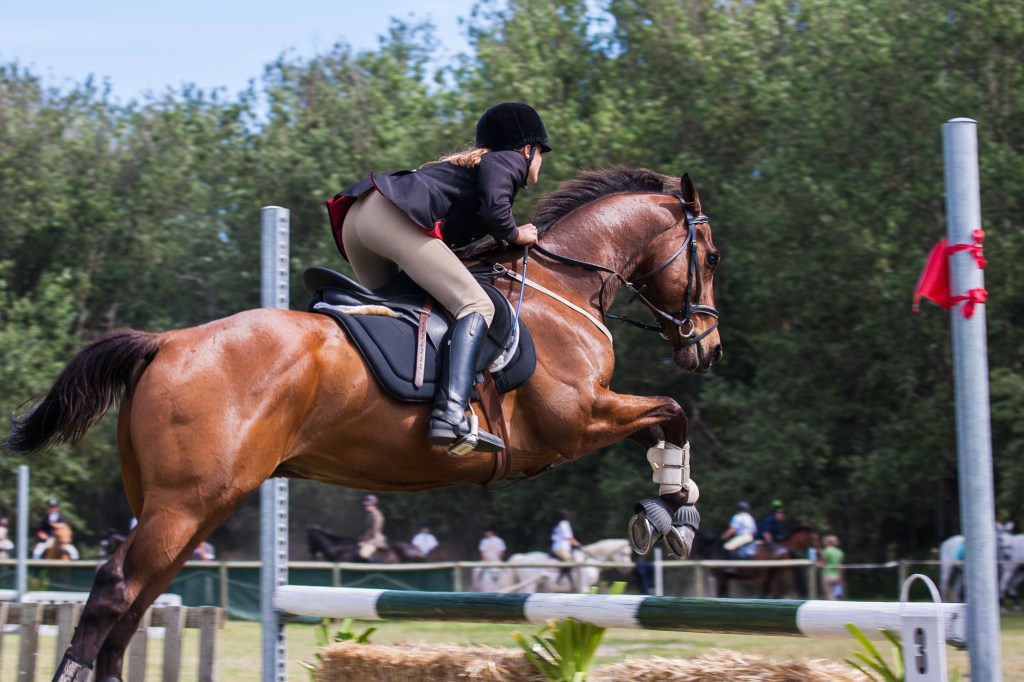
Whether you are seasoned dressage rider or a complete novice, at some point or another you will have probably decided you fancy a little pop over a jump or two and who can blame you? That powerful surge of energy you experience as your horse leaves the ground, makes you feel alive and energised, like you can take on the world. It’s an amazing feeling that you can’t really compare to anything else in life and an extraordinary experience that a non-horsey person would never understand, they just don’t get it! It can be a ton of fun for both you and your horse, allowing you to get some variation in your riding, and is a great way to build up your confidence.
With that being said, learning to jump correctly can be challenging, and takes practice and patience. Particularly if you are a novice rider who has not yet mastered an established and secure, balanced light seat. There are many mistakes novice riders make when learning to jump, that put them in a rather vulnerable position. Learning from our mistakes is the only sure-fire way of us progressing our riding to new levels.
Check out some of the most common mistakes made by novice jumpers below and how you can look to rectify those issues to improve your riding.
Gripping with your legs
This is a really common one for novice riders. Where the balance and core strength has not fully developed and riders end up gripping with their knees in order to stay on. Gripping with your legs makes it much harder to gain a deeper seat, which in turn, makes you bounce out of the saddle more, making you less secure. This creates an uneasy feeling, making you much more vulnerable. Gripping also encourages your horse to move off the leg faster which is certainly not what you are asking for, it sends your horse mixed messages.
Envision a posture where an imaginary vertical line that sits from your ear, to your shoulder, through your hip and directly down to your heel. Your leg should hang from your hip, with weight falling into your heel (be careful not to jam down your heel into the stirrup iron). Try to relax, without completely compromising your posture.
Hands too high
When things get a bit hairy and you feel like you are losing some balance, it is a completely natural reaction to hold your reins up a bit higher. They are a great balancing tool right? Errr not really. Your reins should not be used to compensate for a lack of balance, but for a novice rider, this is a pretty common occurrence and a riding issue that should be rectified quickly.
Concentrate on keeping your hands at hip level and using your seat and core to move naturally with your horse’s movement. Once you have mastered this, you will find you will feel more secure and less likely to rely on your horse for balance. You will learn to carry yourself.
Holding your breath
I am happy to admit that I am still a victim of this one even today. When you feel a bit nervous or panicky about jumping it’s very easy to hold on to your breath and not even realise that you are doing so. No matter how many times you tell yourself ‘ok, I’m going to concentrate on breathing this time’ only to stop breathing again 3 strides out, you can be sure your instructor will still be shouting ‘breath!’ at the top of their lungs. Irregular breathing can cause you to become tense and can make your horse feel like something is wrong.
The best way to combat this is to not only think about it in your head, but to get a bit vocal with it. Count your striding out loud as you approach your jump, hum a tune, in fact heck, sing out loud for the world to hear! It doesn’t really matter what you say, just keep that oxygen flowing to your lungs. It’s a great way to help you relax too.
Looking at the jump
It’s so tempting to be cantering into a fence with your head and eyes angled towards the ground. I mean ‘how big is the jump again?’ ‘Let’s take a look, I don’t want to miss it’ ‘Better check my instructor hasn’t sneakily put this one up whilst I wasn’t looking’. Whatever your reason for looking down, try to concentrate on looking up and straight ahead so your horse can feel as balanced a possible. Look for something in the distance that you can use as a focal point.
It was always drummed in to me to ‘look where you want to end up’ and I never forgot that piece of advice, since I wasn’t that up for hitting the deck! You will also find that jumping is a lot easier if you are looking up and ahead, because it prevents you from anticipating when your horse will jump, which in turn stops you getting ahead of the horses movement.
Reins too long
Are you on a trail ride right now? Absolutely not. There is no reason in this world why you should have reins like washing lines. It’s not helpful to your horse and it certainly won’t be helpful for you. Long reins are usually a result of your horse gradually pulling away at the reins and you just not noticing. You don’t want to restrict your horse by having very short, tight reins, but at the same time you do want to have a contact with your horse’s mouth which provides you with some control.
Many horses are highly skilled rein snatchers, that whip the contact away right before your very eyes. Try to develop a feel for a good, even rein contact and maintain that throughout your jumping sessions. If you do feel like your reins are getting a bit too long, get into the habit of readjusting your contact as much as needed. Long reins are definitely not a good prospect when jumping.
Reins too short
On the flip side, short rein contact is also a very common problem for novice riders. Nerves are a major factor, which is completely understandable. Unfortunately by holding such a tight contact you are making it difficult for your horse to move forward freely and likely making them feel very uncomfortable. You have also encouraged your body to adopt a negative riding position, which makes both yourself and your horse tense.
Try to maintain an even rein contact, where you have a light feel on your horse’s mouth, without it feeling too tight. Imagine holding a baby chick in each hand. You want to ensure you do not squeeze too tightly so that you hurt them, but at the same time you want to ensure you have enough grip that you don’t risk dropping them. It all boils down to a nice even balance of rein contact.
Feet through stirrups
If you’ve ever heard your instructor shouting ‘Keep your heels down’ then you aren’t on your own. It is a common habit for novice riders to point their toes to the floor, which raises your heel and encourages your foot to slide through the stirrup. Your heel will often jam against the stirrup iron and you won’t be feeling very balanced. It can be a difficult habit to get out of and can be particularly troublesome if you are learning to jump. It ultimately means you don’t have much weight down in the stirrup, leaving you in a potentially vulnerable position if your horse decides to pull a dirty stop.
Concentrate on keeping your heels down and creating that vertical line from head to heel. If you find keeping your heels down difficult or it’s all looking a bit forced, why not think of it the opposite way. Keep your toes up!
Being a passenger
I’ve always said there is a big difference between, being ‘on’ a horse and ‘riding’ a horse. If you are just ‘on’ a horse then you are effectively just a passenger. If you are ‘riding’ a horse, then you are in control, in charge of the situation. Horses need some direction from you. They look to you as their leader. Many horses fall apart if they do not have some rider support and the leadership is lacking. It’s very easy for novice riders to fall apart themselves due to nerves and worries when jumping. Nerves are completely understandable, especially when learning something new that has the potential to drop you 5ft on your backside!
For the sake of your horse, try to keep your nerves in check. Stay positive, in charge of the situation, find that confidence and don’t be afraid to move and use your body. If you freeze your horse will feel like they have lost their trusty leader and may well pull in a dirty stop at the jump. Be present in your riding.
Slouching
Just because you are not strutting your stuff around the dressage ring does not by any means give you the permission to slouch. Correct riding posture is important for all disciplines and where you may sit differently in a jump saddle than you would a dressage saddle, maintaining a good posture is important. Keeping your shoulders back and pulling up through your core can help enormously with balance and helps you to maintain a good seat. Consistent bad posture can lead to shoulder and back pain over time which could affect your riding going forward. The last thing you want to do is collapse when jumping a fence.
Whilst training, try focussing on keeping a good posture, pulling up from the ribcage and engaging your core muscles. Jumping will all of a sudden become a lot easier when you stop focussing fully on what your horse is doing and start focussing a bit more on how you are carrying yourself.
Incorrect riding gear
One of the biggest mistakes novice jumpers make (and probably one of the easiest to rectify) is not having the correct gear to do the job. Jumping introduces some additional risks that a novice needs to be aware of. Always ensure you are wearing an industry standard safety helmet specifically for equestrian sports and proper footwear with a small heel that doesn’t have too much grip.
Choose comfortable trousers without a seam such as jodhpurs to prevent rubbing and chaffing. Ideally cover your arms and shoulders for extra protection of sensitive areas of skin. It also certainly wouldn’t go amiss to wear a body protector too.
No-one likes the idea of falling off, but accidents do happen and a well fitted body protector can safeguard your back and vital organs, preventing serious injury. Remember, safety always come first around horses.
 lucysearlefreelance.com